Plant Species - Ranthambhore forest is dry deciduous in character with dhok (Anogeissus pendula) trees as the main vegetation which is the fodder tree for animals. Kulu (Sterculia urens), ronj (Acacia leucophloea), ber (Zizyphus maudrentiana), khimi (Manilkara hexandra), tendu (Diospyrous melanoxylon), polas (Butea monosperma), peepal, mango and banyan comprise other important trees in Ranthambhore. Flame of the forest, which blooms in April is the most beautiful tree and envelopes the forest in a spectacular fiery red aura. The four lakes in Ranthambhore are enclosed by various species of trees like salar (Boswellia serrata), gurjan (Lannea coromandelica) and gum (Sterculia urens).
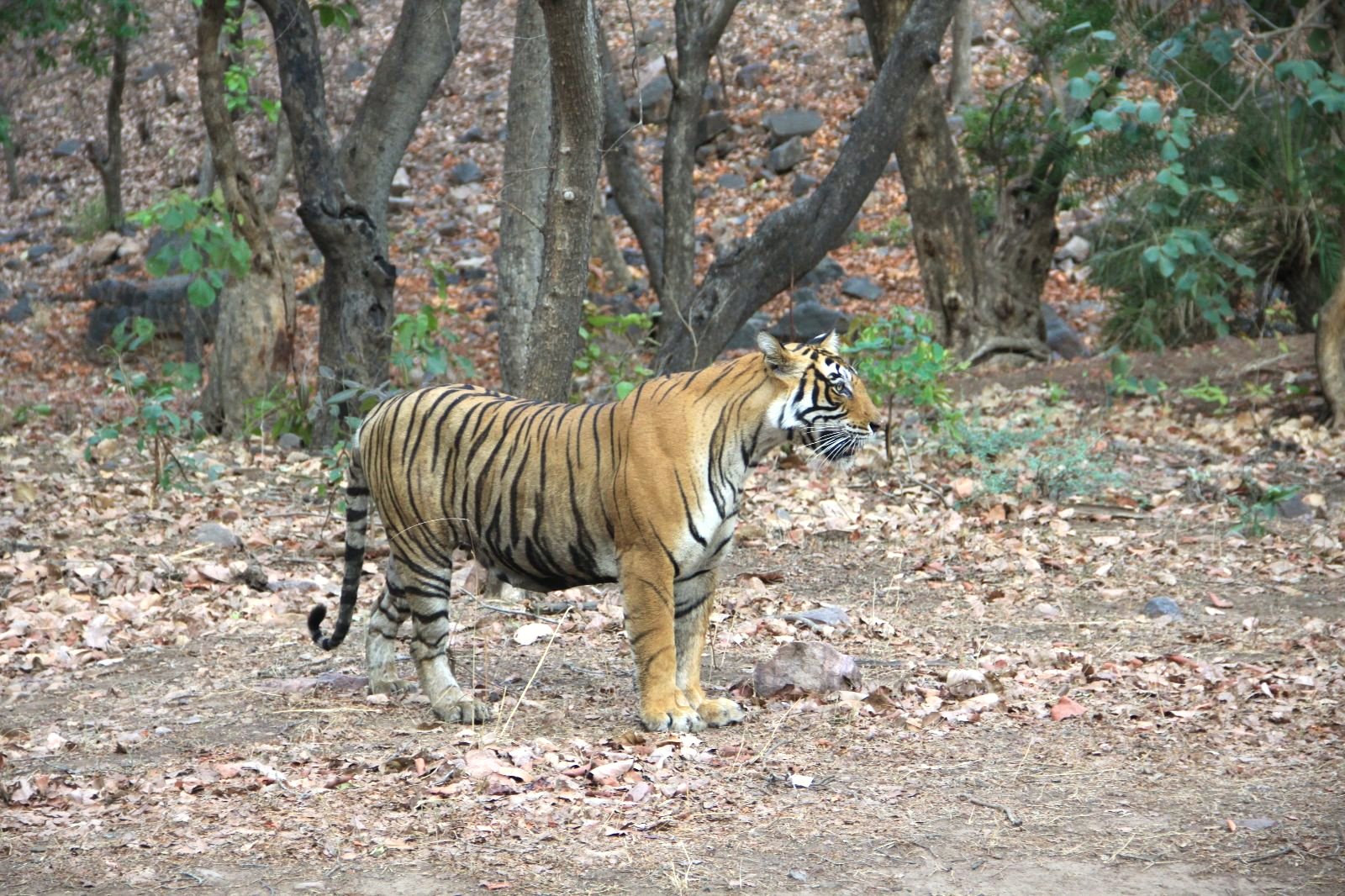
Animal Species - Ranthambhore National Park occupies an area of around 400 sq km with a tiger population of about 32. The tigers can be located easily in Ranthambhore as compared to any other National Parks. The Park also has a large number of other wild species like leopards, the highly endangered caracal, jungle cat, hyena, jackal, sloth bear, wild boar, marsh crocodile, porcupine, common langur, spotted deer, Indian gazelle, sambar (Asiatic stag) and nilgai (bluebull). The nocturnal species like the leopard and the caracal are difficult to locate and thus sightings could be rare.
Birds Species - Ranthambhore is famous for its migratory, water, and woodland birds. There are nearly 270 species of birds in the Park including a large number of migratory birds. Different birds found here are the great Indian horned owl, various species of eagles such as Bonellis eagle and the crested serpent, spoonbills, partridge, quail, parakeets, kingfishers, owls and storks, geese and ducks. But the most seen and the most beautiful bird here is the peacock, the national bird of India. Every evening the peacocks of Ranthambhore line up on the walls of the fort which is situated on a cliff above the Park and, after much calling, climb down to specific roosting trees for the night.